Palm Desert, CA is a thriving city that’s been growing and growing since the 1980s. In fact, it was one of the fastest growing communities in California during the 1980s and ‘90s, and it continues to attract residents of all ages and backgrounds today for its fabulous climate, lifestyle, and shopping. It’s a popular winter destination, too, and many have vacation homes here in addition to the 50,000 or so people who live here year round. Palm Desert has many gated neighborhoods, as well as those that are golfing or country club communities.
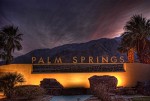
Palm Springs is a medium-sized city located in the state of California. With a population of 47,371 people and 16 constituent neighborhoods, Palm Springs is the 189th largest community in California.
Housing costs in Palm Springs are among some of the highest in the nation, although real estate prices here don’t compare to real estate prices in the most expensive communities in California.
Palm Springs is a decidedly white-collar city, with fully 88.34% of the workforce employed in white-collar jobs, well above the national average. Overall, Palm Springs is a city of service providers, sales and office workers, and professionals. There are especially a lot of people living in Palm Springs who work in sales jobs (13.41%), management occupations (12.06%), and food service (9.66%).
Of important note, Palm Springs is also a city of artists. Palm Springs has more artists, designers and people working in media than 90% of the communities in America. This concentration of artists helps shape Palm Springs’s character.
One interesting thing about the economy is that relatively large numbers of people worked from their home: 12.13% of the workforce. While this number may seem small overall, as a fraction of the total workforce this is high compared to the rest of the county. These workers are often telecommuters who work in knowledge-based, white-collar professions. For example, Silicon Valley has large numbers of people who telecommute. Other at-home workers may be self-employed people who operate small businesses out of their homes.
The education level of Palm Springs citizens is very high relative to the national average among all cities (21.84%): 34.02% of adults in Palm Springs have a bachelor’s degree or even advanced degree.
The per capita income in Palm Springs in 2010 was $35,799, which is upper middle income relative to California, and wealthy relative to the rest of the US. This equates to an annual income of $143,196 for a family of four. However, Palm Springs contains both very wealthy and poor people as well.
Palm Springs is an extremely ethnically-diverse city. The people who call Palm Springs home describe themselves as belonging to a variety of racial and ethnic groups. The greatest number of Palm Springs residents report their race to be White, followed by Asian. Palm Springs also has a sizeable Hispanic population (people of Hispanic origin can be of any race). People of Hispanic or Latino origin account for 25.81% of the city’s residents. Important ancestries of people in Palm Springs include English, Irish, Italian, and French .
Palm Springs also has a high percentage of its population that was born in another country: 21.25%.
The most common language spoken in Palm Springs is English. Other important languages spoken here include Spanish and Tagalog.
Most expensive Palm Springs neighborhoods:
- S Palm Canyon Dr / E Bogert Trl
- Snow Creek
- Tamarisk Rd / N Ave Caballeros
- E Bogert Trl / Andreas Hills Dr
- E Mesquite Ave / S Palm Canyon Dr
- E Tahquitz Canyon Way / N Farrell Dr
- E San Rafael Dr / N Hermosa Dr
- S Farrell Dr / E Ramon Rd
- E Vista Chino / N Cerritos Dr
- N Sunrise Way
What is Indian Lease Land?
In 1876, Pacific Railroad laid the tracks between Los Angeles and Yuma, Arizona. The U.S. government deeded the Agua Caliente 52,000 acres throughout the Coachella Valley (6,700 acres lay within the city of Palm Springs). The government gave the railroad a checkerboard of every square mile of land for 10 miles on either side of the railroad right-of-way. The Agua Caliente tribe got the non-Pacific Railroad owned squares. The city of Palm Springs is built on a “checkerboard” consisting of alternating Indian and non-Indian land.
Some of the most popular neighborhoods in Palm Springs are on Indian land. Over 23,000 residential properties are located on Indian lease land, which give the home owner specific rights to the property for the duration of the lease. Most Indian leases are administrated by the Bureau of Indian Affairs; a homeowner doesn’t deal with the Indian owners directly, but instead usually with the appointed property management company or Bureau of Indian Affairs office. Not all “lease land” properties are governed by the Bureau of Indian Affairs; some lease land parcels are owned by private leaseholders, often referred to as “Business Leases” or “Developer Leases.” Review your title reports on the specific properties to determine ownership and lease status.
More information: History of Indian Lease Land
Are Mortgages typically available on lease land? Yes.
Some leases do have minimal down payment requirements, term requirements and other specific conditions, however has been typically possible to get a loan on lease land in the past. Interests rates tend to be the same for Lease and Fee Simple land, but subject to the constant changes in the lending world. A lender may require the remaining term of the lease to be at least 5 years longer then the term of the loan. Not all lenders will lend on lease land. WE RECOMMEND CHOOSING A LOCAL LENDER THAT IS FAMILIAR WITH LEASE LAND. Consult with your lender regarding the ability to provide a loan for any property you are considering. (Contact The Paul Kaplan Group for more information on lenders that process lease loan applications.)
The price of the lease can vary generally between $1400 and $8000 per year depending on the property, and subject to change; (some are higher, some lower). Some lease payments are paid annually; others are divided and paid monthly. Some leases have built in escalation clauses in the lease; other lease increases may be tied in with the Consumer Price Index. Read the individual lease for exact information regarding the term of the lease and any increases in lease fees.
Lease land typically consists of long term land leases. The length of the lease will vary. However each lease is unique and should be reviewed for the specific terms affecting a particular property. Historically, Indian Lease land properties have increased/decreased in value at the same rate as Fee Simple land (land that is not lease land), however property values are never guaranteed for lease land or fee land.
Lease Land vs. Fee Simple
The primary difference between buying land and leasing it is obvious; lease land reduces the cost of a home compared to “Fee Land”, land that you own. So, by owning on leased land, the homeowner gets the use of the land without the capital outlay – and may be able to afford a larger home for less money. Also, since no one actually owns a home until the loan is paid off, most so-called “land owners” don’t really own their property for 30 years.
- Prices are traditionally 15% to 20% less for comparable properties on fee land, but can vary. However, in recent years, in some neighborhoods, there hasn’t been a big difference in pricing between fee land and lease land properties. If you want to live in certain neighborhoods in Palm Springs, often the only options are purchasing on leased land.
- Property taxes: We advise you to research the tax information with the Country of Riverside tax assessor. Note: There are current legal disputes with the owners of lease land concerning the ability of the Country to tax lease land. We advise anyone interested in purchasing a property on lease land, to do their due diligence to understand the pending litigation and how the outcome may affect ownership of the property.
Common question: Won’t the value of my real estate climb faster if I own the land?
While many things determine resale values, recent comps for resales of homes on leased land have either risen or declined in similar proportions as other homes in the same areas. The condition in which you keep your home most likely has far more influence on its resale value than the fact it is or is not on lease land. When considering purchasing any property, we suggest buyers check comps for the specific neighborhood you are considering.
To read more about lease land, please contact The Bureau of Indian Affairs TESA Branch in Palm Springs at 760-416–3289 for additional information on lease land.
FUN THINGS TO DO | ARE YOU READY TO EXPLORE?
The Coachella Valley Preserve may seem like a barren desert, but keep your eyes peeled and you’ll see that its 20,000-plus acres are more than just sand and brush. The preserve encompasses the smaller Thousand Palms Oasis preserve, which boasts more than 25 miles of hiking paths. Along the trails you’ll spot rare wildlife (including the Coachella Valley fringe-toed lizard) and lush palm woodland oases and desert wetlands, which at different times of the year blossom with wildflowers.
Joshua Tree National Park is an oasis in the center of the desert. From Hidden Valley (which features a nice, easy hike) to the Cholla Cactus Garden (home to many a photo op at sunset), Joshua Tree caters to a variety of active travelers. Meanwhile, with its perch in the Little San Bernardino Mountains, the Keyes View lookout is another great place for a spectacular view of the Coachella Valley.
The city of Palm Springs rests in the shadows of the San Jacinto Mountains. The towering, snow-topped peaks of Southern California’s second-highest mountain range are beautiful to behold from the valley floor, but many visitors say that a mountaintop experience is incredible. To reach the summit, you’ll take the Palm Springs Aerial Tramway. Once you rise 8,516 feet to the top, you can hike, snowshoe or cross-country ski before heading back down the mountain via a return tram.
The Palm Springs Art Museum, which was founded in 1938, contains a stunning collection of works, including pieces by big names like Andy Warhol and Marc Chagall. You’ll also find an ever-changing list of rotating exhibits, which have included studies of impressionism, contemporary sculpture, pop and graphic art, and architecture. The facility’s permanent collection is not to be missed, either.
The Living Desert is part-zoo and part-botanical garden, all in the extraordinary setting of a desert. Along with animals like mountain lions, bighorn sheep and meerkats, there are a handful of gardens that showcase more than 1,400 species of plants, including multiple varieties of cacti, prickly pear and agave.
The Elvis Honeymoon Hideaway was first the Las Palmas estate, home to 1960s socialites Robert and Helene Alexander. In the mid-1960s, the Alexanders leased the home to none other than the King and his new bride Priscilla. The couple honeymooned at the estate, and nine months later their first and only child, Lisa, was born. Today, visitors can tour the home with an Elvis or Priscilla look-alike “tribute artist” or guide. Special events like an annual tribute concert are also hosted on-site.
The Palm Springs Air Museum boasts an extensive collection of aircraft from World War II, including planes that range from the Boeing B-17 Flying Fortress to the Grumman F7F Tigercat to the Lockheed T-33 Shooting Star. The planes are positioned throughout the museum, not unlike the Smithsonian’s National Air and Space Museum in Washington, D.C.
Indian Canyon is located 6 miles south of central Palm Springs, these canyons, which consist of Palm Canyon, Murray Canyon and Andreas Canyon, sit on the reservation lands of the Agua Caliente, a local Native American tribe. All three canyons offer hiking trails with breathtaking desert scenery, but other activities are also available. At Palm Canyon, you can go horseback riding or purchase authentic Native American artwork or pottery. Andreas and Murray canyons, meanwhile, are best for animal-spotting; you may even see endangered species like the Peninsular desert bighorn sheep and the Least Bell’s Vireo bird while exploring Murray Canyon. The Agua Caliente Cultural Museum, Tahquitz Canyon and three resorts – Indian Canyons Golf Resort, the Spa Resort Casino and Aqua Caliente Casino Resort Spa – are also situated on or near the reservation.
For stunning scenery and a look at Native American history and culture, check out the Agua Caliente tribe’s Tahquitz Canyon. Situated less than 2 miles southwest of downtown Palm Springs, this area of the tribe’s reservation boasts a 60-foot waterfall (accessible via the Tahquitz Canyon Trail), rock art and a variety of flora and fauna. You’ll also find the Tahquitz Canyon Visitor Center, where you can watch a movie about the canyon, peruse various artifacts, buy souvenirs and take in your surroundings from an observation deck. Additional facilities, including three resorts, the Agua Caliente Cultural Museum and the Indian Canyons, can be found on or near the reservation as well.
The Moorten Botanical Garden is a one-acre garden that features cacti and other desert plants. Located on South Palm Canyon Drive, it is a family-owned garden that Patricia and Chester “Cactus Slim” Moorten, one of the original “Keystone Cops,” established in 1938.
PLEASE NOTE: None of the above statements can be guaranteed. Before you enter a transaction on lease land, you should read and review all contracts, leases and information about the specific lease as all leases are unique and subject to changes. We recommend you consult with your accountant, attorney and tax advisor prior to making any real estate purchases on Lease OR Fee land as well. Thank you for visiting your reliable source for Palm Springs real estate and be sure to contact us today: 1-877-YS-WE-CAN