Category: Orange County Communities

  • Newport Beach, California

    Newport Beach, California

    Newport Beach is a larger medium-sized coastal city (i.e. on the ocean, a bay, or inlet) located in the state of California. With a population of 87,273 people and 19 constituent neighborhoods, Newport Beach is the 85th largest community in California.

    Newport Beach home prices are not only among the most expensive in California, but Newport Beach real estate also consistently ranks among the most expensive in America.

    Newport Beach is a decidedly white-collar city, with fully 94.07% of the workforce employed in white-collar jobs, well above the national average. Overall, Newport Beach is a city of managers, professionals and sales and office workers. There are especially a lot of people living in Newport Beach who work in management occupations (24.22%), sales jobs (17.54%) and business and financial occupations (9.48%).

    Of important note, Newport Beach is also a city of artists. Newport Beach has more artists, designers and people working in media than 90% of the communities in America. This concentration of artists helps shape Newport Beach’s character.

    Also of interest is that Newport Beach has more people living here who work in computers and math than 95% of the places in the US.

    A relatively large number of people in Newport Beach telecommute to their jobs. Overall, about 9.66% of the workforce works from home. While this may seem like a small number, as a fraction of the total workforce it ranks among the highest in the country. These workers are often telecommuters who work in knowledge-based, white-collar professions. For example, Silicon Valley has large numbers of people who telecommute. Other at-home workers may be self-employed people who operate small businesses out of their homes.
    One thing that you will notice about Newport Beach is that there is a good-sized population of people who are young, single, educated, and upwardly-mobile career starters. Many singles consider Newport Beach a good place to live without being in a really big city, with opportunities for friendships and fun with others like themselves.

    Newport Beach is also nautical, which means that parts of it are somewhat historic and touch the ocean or tidal bodies of water, such as inlets and bays. Quite often, nautical areas such as these attract visitors and locals who come to enjoy the scenery and various waterfront activities.

    Newport Beach Information and Demographics

    If knowledge is power, Newport Beach is a pretty powerful place. 64.08% of the adults in Newport Beach have earned a 4-year college degree, masters degree, MD, law degree, or even PhD. Compare that to the national average of 21.84% for all cities and towns.

    The per capita income in Newport Beach in 2010 was $78,494, which is wealthy relative to California and the nation. This equates to an annual income of $313,976 for a family of four. However, Newport Beach contains both very wealthy and poor people as well.
    Newport Beach is a somewhat ethnically-diverse city. The people who call Newport Beach home describe themselves as belonging to a variety of racial and ethnic groups. The greatest number of Newport Beach residents report their race to be White, followed by Asian. Important ancestries of people in Newport Beach include German, English, Irish, Italian, Iranian and French.

    The most common language spoken in Newport Beach is English. Other important languages spoken here include Spanish and Persian.

    Most Expensive Newport Beach Neighborhoods:

    1. Pacific Coast Hwy / Bayside Dr
    2. Newport Coast
    3. Via Lido Nord / Via Lido Soud
    4. Corona del Mar
    5. Lido Isle / Balboa Island
    6. Park Ave / N Bayfront
    7. Newport Heights
    8. San Joaquin Hills
    9. Pacific Coast Hwy / Bonnie Doone Ter
    10. Buck Gully Dr / Sandcastle Dr

  • Laguna Beach, California

    Laguna Beach, California

    Laguna Beach is a medium-sized coastal city (i.e. on the ocean, a bay, or inlet) located in the state of California. With a population of 23,250 people and five constituent neighborhoods, Laguna Beach is the 293rd largest community in California.

    Laguna Beach home prices are not only among the most expensive in California, but Laguna Beach real estate also consistently ranks among the most expensive in America.

    Laguna Beach is a decidedly white-collar city, with fully 94.07% of the workforce employed in white-collar jobs, well above the national average. Overall, Laguna Beach is a city of professionals, sales and office workers and managers. There are especially a lot of people living in Laguna Beach who work in management occupations (20.32%), sales jobs (19.42%) and office and administrative support (8.78%).

    Of important note, Laguna Beach is also a city of artists. Laguna Beach has more artists, designers and people working in media than 90% of the communities in America. This concentration of artists helps shape Laguna Beach’s character.

    Telecommuters are a relatively large percentage of the workforce: 12.64% of people work from home. While this number may seem small overall, as a fraction of the total workforce it is high relative to the nation. These workers are often telecommuters who work in knowledge-based, white-collar professions. For example, Silicon Valley has large numbers of people who telecommute. Other at-home workers may be self-employed people who operate small businesses out of their homes.
    Laguna Beach is also nautical, which means that parts of it are somewhat historic and touch the ocean or tidal bodies of water, such as inlets and bays. Such areas are often places that visitors and locals go for waterfront activities or taking in the scenery.

    Laguna Beach Information and Demographics

    Do you like to read, write and learn? If you move to Laguna Beach, you’ll likely find that many of your neighbors like to as well. Laguna Beach is one of the more educated communities in America, with a full 65.05% of its adults having a college degree or even advanced degree, compared to a national average across all communities of 21.84%.

    The per capita income in Laguna Beach in 2010 was $75,460, which is wealthy relative to California and the nation. This equates to an annual income of $301,840 for a family of four.

    Buy or sell Laguna Beach Real Estate get up to $2,000 or more Cash Back
    The people who call Laguna Beach home describe themselves as belonging to a variety of racial and ethnic groups. The greatest number of Laguna Beach residents report their race to be White, followed by Asian. Important ancestries of people in Laguna Beach include German, English, Irish, Italian, Scottish and European.

    The most common language spoken in Laguna Beach is English. Some people also speak Spanish.

    Most Expensive Laguna Beach Neighborhoods:

    1. South Laguna
    2. Alta Laguna Blvd / Temple Hills Dr
    3. City Center
    4. Canyon Acres
    5. Highland Way / Glenneyre St

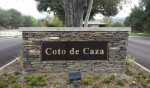
  • Coto de Caza, California

    Coto de Caza, California

    Coto De Caza median real estate price is $1,134,247, which is more expensive than 93.0% of the neighborhoods in California and 99.0% of the neighborhoods in the U.S.

    The average rental price in Coto De Caza is currently $2,599, based on NeighborhoodScout’s exclusive analysis. The average rental cost in this neighborhood is higher than 93.0% of the neighborhoods in California.

    Coto De Caza is a suburban neighborhood (based on population density) located in Trabuco Canyon, California.

    Coto De Caza real estate is primarily made up of medium sized (three or four bedroom) to large (four, five or more bedroom) single-family homes and townhomes. Most of the residential real estate is owner occupied. Many of the residences in the Coto De Caza neighborhood are established but not old, having been built between 1970 and 1999. A number of residences were also built between 2000 and the present.

    Real estate vacancies in Coto De Caza are 5.2%, which is lower than one will find in 75.2% of American neighborhoods. Demand for real estate in Coto De Caza is above average for the U.S., and may signal some demand for either price increases or new construction of residential product for this neighborhood.

    NOTABLE & UNIQUE NEIGHBORHOOD CHARACTERISTICS

    Many things matter about a neighborhood, but the first thing most people notice is the way a neighborhood looks and its particular character. For example, one might notice whether the buildings all date from a certain time period or whether shop signs are in multiple languages. This particular neighborhood in Trabuco Canyon, the Coto De Caza neighborhood, has some outstanding things about the way it looks and its way of life that are worth highlighting.

    NOTABLE & UNIQUE: PEOPLE

    If you come to know the people here, you will recognize that you’re in the company of one of the wealthiest communities in the nation. In fact, a mere 0.8% of America’s neighborhoods are wealthier than the Coto De Caza neighborhood. Real estate here is exceedingly well-maintained, and similarly, tends to maintain its value over time. The cars driven are mostly luxury brands like Mercedes, Audi, BMW, and Lexus. If the public schools aren’t up to snuff, the residents of this neighborhood preferentially send their children to private preparatory schools. Vacation to Disney? Yes, but equally popular are summers in Europe.

    In addition, according to NeighborhoodScout’s exclusive analysis, Coto De Caza is among the best neighborhoods for families in California. In fact, this neighborhood is more family-friendly than 98.5% of neighborhoods in the entire state of California. Its combination of top public schools, low crime rates, and owner-occupied single family homes gives this area the look and feel of a “Leave It to Beaver” episode. Many other families also live here, making it easy to socialize and develop a strong sense of community. In addition, the high number of college-educated parents influences the academic success of the local schools. Overall, you will find all of the amenities a family needs to thrive in the Coto De Caza neighborhood. In addition to being an excellent choice for families with school-aged children, this neighborhood is also a very good choice for highly educated executives, urban sophisticates and active retirees.

    Also, priests and therapists would like to think they know the secrets to a truly successful marriage, but according to NeighborhoodScout’s research, the folks of the Coto De Caza neighborhood may actually hold the key. 67.8% of its residents are married, which is a higher percentage than is found in 96.7% of the neighborhoods in America.

    NOTABLE & UNIQUE: DIVERSITY

    Did you know that the Coto De Caza neighborhood has more Iranian and Yugoslav ancestry people living in it than nearly any neighborhood in America? It’s true! In fact, 2.4% of this neighborhood’s residents have Iranian ancestry and 0.9% have Yugoslav ancestry.

    Coto De Caza is also pretty special linguistically. Significantly, 2.4% of its residents five years old and above primarily speak Persian at home. While this may seem like a small percentage, it is higher than 98.8% of the neighborhoods in America.

    NOTABLE & UNIQUE: MODES OF TRANSPORTATION

    A unique way of commuting is simply not to. And in the Coto De Caza neighborhood, analysis shows that 15.1% of the residents work from home, avoiding a commute altogether. This may not seem like a large number, but it is a higher proportion of people working from home than is found in 98.4% of the neighborhoods in the United States. One thing NeighborhoodScout’s research reveals is that the wealthier and/or more isolated the neighborhood, the greater the proportion of residents who choose to work from home.

    Also, while most Americans do drive to work alone each day, the Coto De Caza neighborhood stands out by having 94.5% of commuters doing so, which is a higher proportion of people driving alone to work than NeighborhoodScout found in 97.2% of all American neighborhoods.

    NOTABLE & UNIQUE: REAL ESTATE

    In addition, most neighborhoods are composed of a mixture of ages of homes, but the Coto De Caza stands out as rather unique in having nearly all of its residential real estate built in one time period, namely between 1970 and 1999, generally considered to be established, but not old housing. What you’ll sense when you look around or drive the streets of this neighborhood is that many of the residences look the same because of this similarity of age. In fact, 91.8% of the residential real estate here was built in this one time period.

    Furthermore, one way that the Coto De Caza neighborhood really stands out, is that it has more large 4, 5, or additional bedroom homes and real estate than 96.3% of the neighborhoods in America. When you walk or drive around this neighborhood, you’ll instantly notice the size of the homes here which definitely makes a strong visual statement.

    THE NEIGHBORS: INCOME

    How wealthy a neighborhood is, from very wealthy, to middle income, to low income is very formative with regard to the personality and character of a neighborhood. Equally important is the rate of people, particularly children, who live below the federal poverty line. In some wealthy gated communities, the areas immediately surrounding can have high rates of childhood poverty, which indicates other social issues. NeighborhoodScout’s analysis reveals both aspects of income and poverty for this neighborhood.

    The neighbors in the Coto De Caza neighborhood in Trabuco Canyon are wealthy, making it among the 15% highest income neighborhoods in America. NeighborhoodScout’s exclusive analysis reveals that this neighborhood has a higher income than 99.2% of the neighborhoods in America. In addition, 2.4% of the children seventeen and under living in this neighborhood are living below the federal poverty line, which is a lower rate of childhood poverty than is found in 84.9% of America’s neighborhoods.

    THE NEIGHBORS: OCCUPATIONS

    A neighborhood is far different if it is dominated by enlisted military personnel rather than people who earn their living by farming. It is also different if most of the neighbors are clerical support or managers. What is wonderful is the sheer diversity of neighborhoods, allowing you to find the type that fits your lifestyle and aspirations.

    In the Coto De Caza neighborhood, 55.6% of the working population is employed in executive, management, and professional occupations. The second most important occupational group in this neighborhood is sales and service jobs, from major sales accounts, to working in fast food restaurants, with 31.9% of the residents employed. Other residents here are employed in clerical, assistant, and tech support occupations (9.2%), and 3.2% in manufacturing and laborer occupations.

    THE NEIGHBORS: ETHNICITY / ANCESTRY

    Culture is the shared learned behavior of peoples. Undeniably, different ethnicities and ancestries have different cultural traditions, and as a result, neighborhoods with concentrations of residents of one or another ethnicities or ancestries will express those cultures. It is what makes the North End in Boston so fun to visit for the Italian restaurants, bakeries, culture, and charm, and similarly, why people enjoy visiting Chinatown in San Francisco.

    In the Coto De Caza neighborhood in Trabuco Canyon, CA, residents most commonly identify their ethnicity or ancestry as Irish (12.9%). There are also a number of people of German ancestry (9.7%), and residents who report Italian roots (9.3%), and some of the residents are also of Mexican ancestry (7.8%), along with some Asian ancestry residents (6.5%), among others. In addition, 11.9% of the residents of this neighborhood were born in another country.

    THE NEIGHBORS: LANGUAGES

    The languages spoken by people in this neighborhood are diverse. These are tabulated as the languages people preferentially speak when they are at home with their families. The most common language spoken in the Coto De Caza neighborhood is English, spoken by 87.1% of households. Other important languages spoken here include Spanish and Persian.

    GETTING TO WORK

    Even if your neighborhood is walkable, you may still have to drive to your place of work. Some neighborhoods are located where many can get to work in just a few minutes, while others are located such that most residents have a long and arduous commute. The greatest number of commuters in Coto De Caza neighborhood spend between 30 and 45 minutes commuting one-way to work (37.0% of working residents), which is at or a bit above the average length of a commute across all U.S. neighborhoods.

    Here most residents (94.5%) drive alone in a private automobile to get to work. In addition, quite a number also carpool with coworkers, friends, or neighbors to get to work (5.1%) . In a neighborhood like this, as in most of the nation, many residents find owning a car useful for getting to work.

  • Huntington Beach, California

    Huntington Beach, California

    Huntington Beach is a relatively large coastal city (i.e. on the ocean, a bay, or inlet) located in the state of California. With a population of 197,575 people and 42 constituent neighborhoods, Huntington Beach is the 23rd largest community in California.

    Huntington Beach home prices are not only among the most expensive in California, but Huntington Beach real estate also consistently ranks among the most expensive in America.

    Huntington Beach is a decidedly white-collar city, with fully 86.52% of the workforce employed in white-collar jobs, well above the national average. Overall, Huntington Beach is a city of sales and office workers, professionals and managers. There are especially a lot of people living in Huntington Beach who work in sales jobs (14.56%), management occupations (13.56%) and office and administrative support (12.76%).

    Also of interest is that Huntington Beach has more people living here who work in computers and math than 95% of the places in the US.
    One thing noticeable about Huntington Beach, although not a huge city, is that it has a large population of people who are young, single, educated, and upwardly-mobile career starters. That’s because Huntington Beach is full of single people in their 20s and 30s and who have undergraduate or graduate degrees and are starting careers in professional occupations. This makes Huntington Beach a pretty good place for young, educated career starters looking to find many people like themselves, with good opportunities for friendships, socializing, romance, and fun.

    Huntington Beach is also nautical, which means that parts of it are somewhat historic and touch the ocean or tidal bodies of water, such as inlets and bays. Such areas are often places that visitors and locals go for waterfront activities or taking in the scenery.

    Huntington Beach Information and Demographics

    The education level of Huntington Beach ranks among the highest in the nation. Of the 25-and-older adult population in Huntington Beach, 40.19% have at least a bachelor’s degree. The typical US community has just 21.84% of its adults holding a bachelor’s degree or graduate degree.

    The per capita income in Huntington Beach in 2010 was $42,196, which is wealthy relative to California and the nation. This equates to an annual income of $168,784 for a family of four. However, Huntington Beach contains both very wealthy and poor people as well.
    Huntington Beach is a very ethnically-diverse city. The people who call Huntington Beach home describe themselves as belonging to a variety of racial and ethnic groups. The greatest number of Huntington Beach residents report their race to be White, followed by Asian. Huntington Beach also has a sizeable Hispanic population (people of Hispanic origin can be of any race). People of Hispanic or Latino origin account for 18.74% of the city’s residents. Important ancestries of people in Huntington Beach include German, Irish, English and Italian.

    Foreign born people are also an important part of Huntington Beach’s cultural character, accounting for 16.61% of the city’s population.

    The most common language spoken in Huntington Beach is English. Other important languages spoken here include Spanish and Vietnamese.

    Most Expensive Huntington Beach Neighborhoods:

    1. Pacific Coast Hwy / Seapoint Ave
    2. Huntington Harbour
    3. Pacific Coast Hwy / 17th St
    4. Surfside
    5. Pacific Coast Hwy
    6. City Center
    7. Huntington St / Memphis Ave
    8. Brookhurst St / Pacific Coast Hwy
    9. Brookhurst St / Atlanta Ave
    10. Adams Ave / Lawson Ln

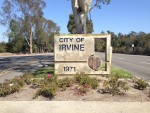
  • Irvine, California

    Irvine, California

    Irvine is a relatively large coastal city (i.e. on the ocean, a bay, or inlet) located in the state of California. With a population of 236,716 people and 33 constituent neighborhoods, Irvine is the 16th largest community in California.

    Irvine home prices are not only among the most expensive in California, but Irvine real estate also consistently ranks among the most expensive in America.

    Irvine is a decidedly white-collar city, with fully 94.08% of the workforce employed in white-collar jobs, well above the national average. Overall, Irvine is a city of professionals, managers and sales and office workers. There are especially a lot of people living in Irvine who work in management occupations (16.04%), sales jobs (12.22%) and office and administrative support (11.35%).

    Also of interest is that Irvine has more people living here who work in computers and math than 95% of the places in the US.

    Irvine is made interesting by being both a reasonably big city and having a major college student population: students here will find that the city provides a lot of amenities, culture, and opportunities for them. Irvine is more than just a college town, however, though the thousands of students certainly are a major part of the character of the city, as well as a contributor to the local economy.

    Not only is Irvine a city with many college students, but it also retains many recent graduates who are looking to start new careers, creating a decent-sized population of people who are young, single, educated, and upwardly-mobile. This makes it a good choice for other relocating single professionals. Here, these young singles will find many others like themselves, with opportunities for friendships, socializing, romance, and fun.

    Irvine is also nautical, which means that parts of it are somewhat historic and touch the ocean or tidal bodies of water, such as inlets and bays. Quite often, nautical areas such as these attract visitors and locals who come to enjoy the scenery and various waterfront activities.

    Irvine Information and Demographics

    If knowledge is power, Irvine is a pretty powerful place. 64.90% of the adults in Irvine have earned a 4-year college degree, masters degree, MD, law degree, or even PhD. Compare that to the national average of 21.84% for all cities and towns.

    The per capita income in Irvine in 2010 was $43,096, which is wealthy relative to California and the nation. This equates to an annual income of $172,384 for a family of four. However, Irvine contains both very wealthy and poor people as well.
    Irvine is an extremely ethnically-diverse city. The people who call Irvine home describe themselves as belonging to a variety of racial and ethnic groups. The greatest number of Irvine residents report their race to be White, followed by Asian. Important ancestries of people in Irvine include German, Iranian, English, Irish and Italian.

    Foreign born people are also an important part of Irvine’s cultural character, accounting for 36.01% of the city’s population.

    The languages spoken by people in Irvine are also diverse. These are tabulated as the languages people preferentially speak when they are at home with their families. The most common language spoken in Irvine is English. Other important languages spoken here include Chinese, Korean, Spanish and Persian.

    Most Expensive Irvine Neighborhoods:

    1. Emerald Bay / Laguna College of Art and Design
    2. Croyden Ter / Edgehill Dr
    3. Concordia U-Irvine / Concordia
    4. Sierra Siena Rd / Sierra Perla Rd
    5. University Dr / Strawberry Farm Rd
    6. Santiago Canyon Rd / Jamboree Rd
    7. Frances
    8. San Marino / Alton Pky
    9. City Center
    10. Trabuco Rd / Yale Ave

    11. Turtle Ridge

  • Orange, California

    Orange, California

    Orange is a larger medium-sized city located in the state of California. With a population of 139,969 people and 28 constituent neighborhoods, Orange is the 41st largest community in California.

    Housing costs in Orange are among some of the highest in the nation, although real estate prices here don’t compare to real estate prices in the most expensive communities in California.

    Orange is neither predominantly blue-collar nor white-collar, instead having a mixed workforce of both blue-collar and white-collar jobs. Overall, Orange is a city of sales and office workers, professionals and service providers. There are especially a lot of people living in Orange who work in office and administrative support (14.83%), sales jobs (11.84%) and management occupations (11.34%).

    Also of interest is that Orange has more people living here who work in computers and math than 95% of the places in the US.
    Another interesting thing about Orange, despite not being a huge city, is that there is a relatively high proportion of people living here who are young, single, and upwardly-mobile professionals. This makes it a good choice for other relocating single professionals. Here, these young singles will find many others like themselves, with opportunities for friendships, socializing, romance, and fun.

    Orange Information and Demographics

    In terms of college education, Orange is substantially better educated than the typical community in the nation, which has 21.84% of the adults holding a bachelor’s degree or graduate degree: 32.98% of adults in Orange have a college degree.

    The per capita income in Orange in 2010 was $31,535, which is upper middle income relative to California, and wealthy relative to the rest of the US. This equates to an annual income of $126,140 for a family of four. However, Orange contains both very wealthy and poor people as well.
    Orange is an extremely ethnically-diverse city. The people who call Orange home describe themselves as belonging to a variety of racial and ethnic groups. The greatest number of Orange residents report their race to be White, followed by Asian. Orange also has a sizeable Hispanic population (people of Hispanic origin can be of any race). People of Hispanic or Latino origin account for 38.38% of the city’s residents. Important ancestries of people in Orange include German, Irish, English and Italian.

    Foreign born people are also an important part of Orange’s cultural character, accounting for 26.03% of the city’s population.

    The most common language spoken in Orange is English. Other important languages spoken here include Spanish and Vietnamese.

    Most Expensive Orange Neighborhoods:

    1. E Longridge Dr / E Westridge Dr
    2. Orange Park Acres
    3. E Chapman Ave / N Equestrian Dr
    4. E Santiago Canyon Rd / N Santiago Blvd
    5. Cowan Heights
    6. E Nohl Ranch Rd / N Santiago Blvd
    7. E Grove Ave / Santiago Blvd
    8. E La Veta Ave / S Loretta Dr
    9. E Chapman Ave / N Tustin St
    10. McPherson

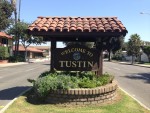
  • Tustin, California

    Tustin, California

    Tustin is a larger medium-sized city located in the state of California. With a population of 78,327 people and 16 constituent neighborhoods, Tustin is the 104th largest community in California.

    Housing costs in Tustin are among some of the highest in the nation, although real estate prices here don’t compare to real estate prices in the most expensive communities in California.

    Unlike some cities, Tustin isn’t mainly white- or blue-collar. Instead, the most prevalent occupations for people in Tustin are a mix of both white- and blue-collar jobs. Overall, Tustin is a city of sales and office workers, professionals and managers. There are especially a lot of people living in Tustin who work in office and administrative support (13.90%), management occupations (12.26%) and sales jobs (11.15%).

    Also of interest is that Tustin has more people living here who work in computers and math than 95% of the places in the US.
    One thing noticeable about Tustin, although not a huge city, is that it has a large population of people who are young, single, educated, and upwardly-mobile career starters. That’s because Tustin is full of single people in their 20s and 30s and who have undergraduate or graduate degrees and are starting careers in professional occupations. This makes Tustin a pretty good place for young, educated career starters looking to find many people like themselves, with good opportunities for friendships, socializing, romance, and fun.

    Tustin Information and Demographics

    The population of Tustin is very well educated relative to most cities and towns in the nation, where the average community has 21.84% of its adult population holding a 4-year degree or higher: 39.01% of adults in Tustin have a bachelor’s degree or even advanced degree.

    The per capita income in Tustin in 2010 was $31,524, which is upper middle income relative to California, and wealthy relative to the rest of the US. This equates to an annual income of $126,096 for a family of four. However, Tustin contains both very wealthy and poor people as well.
    Tustin is an extremely ethnically-diverse city. The people who call Tustin home describe themselves as belonging to a variety of racial and ethnic groups. The greatest number of Tustin residents report their race to be White, followed by Asian. Tustin also has a sizeable Hispanic population (people of Hispanic origin can be of any race). People of Hispanic or Latino origin account for 39.40% of the city’s residents. Important ancestries of people in Tustin include German, English and Irish.

    Tustin also has a high percentage of its population that was born in another country: 35.84%.

    The languages spoken by people in Tustin are also diverse. These are tabulated as the languages people preferentially speak when they are at home with their families. The most common language spoken in Tustin is English. Other important languages spoken here include Spanish, Vietnamese, Chinese and Korean.

    Most Expensive Tustin Neighborhoods:

    1. North Tustin
    2. Pioneer Rd / Jamboree Rd
    3. La Colina Dr / Red Hill Ave
    4. N Tustin Ave / Wellington Ave
    5. Browning
    6. Walnut Ave / Tustin Ranch Rd
    7. Irvine Blvd / Red Hill Ave
    8. Red Hill Ave / Edinger Ave
    9. Tustin Ranch Rd / Jamboree Rd
    10. Red Hill Ave / San Juan St

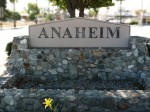
  • Anaheim Hills, California

    Anaheim Hills, California

    Anaheim Hills median real estate price is $835,820, which is more expensive than 84.3% of the neighborhoods in California and 97.4% of the neighborhoods in the U.S.

    The average rental price in Anaheim Hills is currently $2,421, based on NeighborhoodScout’s exclusive analysis. The average rental cost in this neighborhood is higher than 89.2% of the neighborhoods in California.

    Anaheim Hills is a suburban neighborhood (based on population density) located in Anaheim, California.

    Anaheim Hills real estate is primarily made up of large (four, five or more bedroom) to medium sized (three or four bedroom) single-family homes and townhomes. Most of the residential real estate is owner occupied. Many of the residences in the Anaheim Hills neighborhood are established but not old, having been built between 1970 and 1999. A number of residences were also built between 1940 and 1969.

    In Anaheim Hills, the current vacancy rate is 3.5%, which is a lower rate of vacancies than 85.0% of all neighborhoods in the U.S. This means that the housing supply in Anaheim Hills is very tight compared to the demand for property here.

    NOTABLE & UNIQUE NEIGHBORHOOD CHARACTERISTICS

    When you see a neighborhood for the first time, the most important thing is often the way it looks, like its homes and its setting. Some places look the same, but they only reveal their true character after living in them for a while because they contain a unique mix of occupational or cultural groups. This neighborhood is very unique in some important ways, according to NeighborhoodScout’s exclusive exploration and analysis.

    NOTABLE & UNIQUE: DIVERSITY

    Did you know that the Anaheim Hills neighborhood has more Iranian and Armenian ancestry people living in it than nearly any neighborhood in America? It’s true! In fact, 11.2% of this neighborhood’s residents have Iranian ancestry and 6.6% have Armenian ancestry.

    Anaheim Hills is also pretty special linguistically. Significantly, 11.2% of its residents five years old and above primarily speak Persian at home. While this may seem like a small percentage, it is higher than 99.9% of the neighborhoods in America.

    NOTABLE & UNIQUE: MODES OF TRANSPORTATION

    Our research reveals that 94.7% of commuters who live in the Anaheim Hills neighborhood get to work each day by driving alone in their automobiles, which is a higher proportion than 97.5% of U.S. neighborhoods.

    NOTABLE & UNIQUE: PEOPLE

    The Anaheim Hills neighborhood is considered a solid choice for executive lifestyles. NeighborhoodScout’s analysis ranks it as better than 90.4% of California neighborhoods for executive living, based on the wealthy, educated professionals, executives, and managers who choose to reside here, the spacious homes that are prominent features of the real estate in the neighborhood, and the high real estate appreciation rates found here relative to other neighborhoods in the state. In addition to being an excellent choice for highly educated executives, this neighborhood is also a very good choice for urban sophisticates.

    NOTABLE & UNIQUE: REAL ESTATE

    In addition, one way that the Anaheim Hills neighborhood really stands out, is that it has more large 4, 5, or additional bedroom homes and real estate than 98.6% of the neighborhoods in America. When you walk or drive around this neighborhood, you’ll instantly notice the size of the homes here which definitely makes a strong visual statement.

    Furthermore, most neighborhoods are composed of a mixture of ages of homes, but the Anaheim Hills stands out as rather unique in having nearly all of its residential real estate built in one time period, namely between 1970 and 1999, generally considered to be established, but not old housing. What you’ll sense when you look around or drive the streets of this neighborhood is that many of the residences look the same because of this similarity of age. In fact, 92.1% of the residential real estate here was built in this one time period.

    THE NEIGHBORS: INCOME

    How wealthy a neighborhood is, from very wealthy, to middle income, to low income is very formative with regard to the personality and character of a neighborhood. Equally important is the rate of people, particularly children, who live below the federal poverty line. In some wealthy gated communities, the areas immediately surrounding can have high rates of childhood poverty, which indicates other social issues. NeighborhoodScout’s analysis reveals both aspects of income and poverty for this neighborhood.

    The neighbors in the Anaheim Hills neighborhood in Anaheim are wealthy, making it among the 15% highest income neighborhoods in America. NeighborhoodScout’s exclusive analysis reveals that this neighborhood has a higher income than 89.1% of the neighborhoods in America. In addition, 7.7% of the children seventeen and under living in this neighborhood are living below the federal poverty line, which is a lower rate of childhood poverty than is found in 69.9% of America’s neighborhoods.

    THE NEIGHBORS: OCCUPATIONS

    The old saying “you are what you eat” is true. But it is also true that you are what you do for a living. The types of occupations your neighbors have shape their character, and together as a group, their collective occupations shape the culture of a place.

    In the Anaheim Hills neighborhood, 55.4% of the working population is employed in executive, management, and professional occupations. The second most important occupational group in this neighborhood is sales and service jobs, from major sales accounts, to working in fast food restaurants, with 25.0% of the residents employed. Other residents here are employed in clerical, assistant, and tech support occupations (11.5%), and 5.9% in manufacturing and laborer occupations.

    THE NEIGHBORS: ETHNICITY / ANCESTRY

    Culture is shared learned behavior. We learn it from our parents, their parents, our houses of worship, and much of our culture – our learned behavior – comes from our ancestors. That is why ancestry and ethnicity can be so interesting and important to understand: places with concentrations of people of one or more ancestries often express those shared learned behaviors and this gives each neighborhood its own culture. Even different neighborhoods in the same city can have drastically different cultures.

    In the Anaheim Hills neighborhood in Anaheim, CA, residents most commonly identify their ethnicity or ancestry as Mexican (17.6%). There are also a number of people of Asian ancestry (14.2%), and residents who report Irania roots (11.2%), and some of the residents are also of German ancestry (7.2%), along with some Armenian ancestry residents (6.6%), among others. In addition, 28.3% of the residents of this neighborhood were born in another country.

    THE NEIGHBORS: LANGUAGES

    The languages spoken by people in this neighborhood are diverse. These are tabulated as the languages people preferentially speak when they are at home with their families. The most common language spoken in the Anaheim Hills neighborhood is English, spoken by 66.9% of households. Other important languages spoken here include Persian, Spanish, South Asian languages and Gujarati (native to the Indian state of Gujarat).

    GETTING TO WORK

    How you get to work – car, bus, train or other means – and how much of your day it takes to do so is a large quality of life and financial issue. Especially with gasoline prices rising and expected to continue doing so, the length and means of one’s commute can be a financial burden. Some neighborhoods are physically located so that many residents have to drive in their own car, others are set up so many walk to work, or can take a train, bus, or bike. The greatest number of commuters in Anaheim Hills neighborhood spend between 15 and 30 minutes commuting one-way to work (35.0% of working residents), which is shorter than the time spent commuting to work for most Americans.

    Here most residents (94.7%) drive alone in a private automobile to get to work. In a neighborhood like this, as in most of the nation, many residents find owning a car useful for getting to work.
error: JoinHSHS.com is protected!